
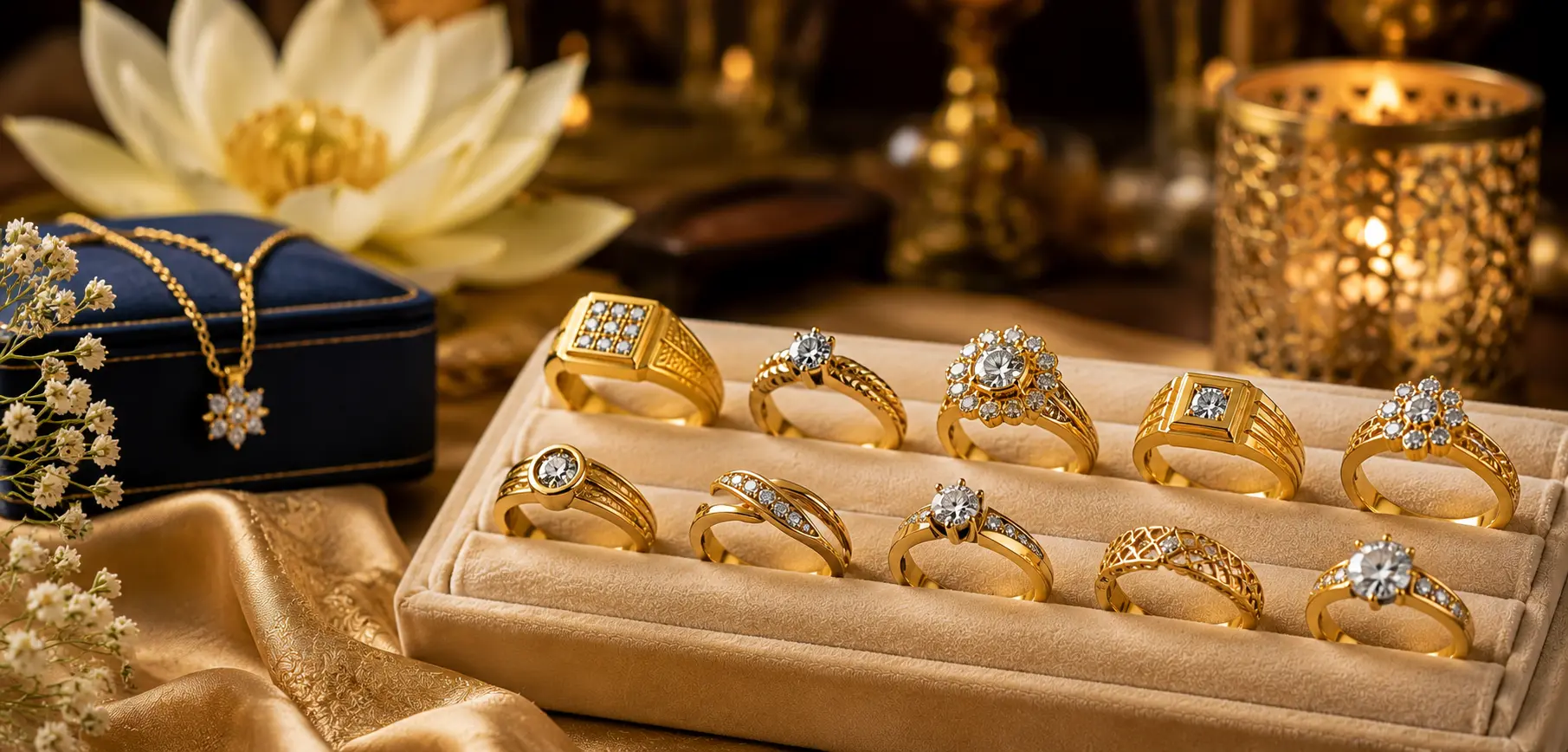
Gold jewellery is rarely an ordinary purchase. It may celebrate a wedding, honour a milestone, continue a family tradition, or become part of a legacy passed down through generations. Yet the beauty of a piece should never distract from the details that determine its true value.
Before buying gold rings in Bangalore, verify the BIS hallmark and HUID, compare gold purity, understand pricing, review exchange policies, and inspect craftsmanship. Choosing a trusted jewellery showroom with transparent billing, certified products, and reliable after-sales support helps ensure a confident purchase and lasting value.
1. Confirm the BIS Hallmark
Begin with the most important assurance: the BIS hallmark. Hallmarking provides independent confirmation of the purity or fineness marked on a gold article.
A reliable jeweller should also display its BIS registration certificate and help customers view the hallmark clearly. According to BIS guidelines, registered jewellery stores should display their registration certificate and provide access to a magnifying glass so customers can inspect the hallmark.
Do not treat a verbal purity claim as sufficient. Inspect the mark on the jewellery itself, especially when purchasing a high-value bridal, festive or heirloom piece.
2. Verify the HUID Before Paying
A hallmarked article carries a Hallmark Unique Identification, commonly known as HUID. Consumers can use the Verify HUID feature on the official BIS Care app to check the authenticity and recorded details of the jewellery before completing the purchase.
This simple digital check adds an important layer of confidence. The HUID visible on the ornament should correspond with the information displayed through the app.
Verification is particularly valuable for significant purchases, where purity and authenticity directly influence both emotional and financial value.
3. Choose the Right Purity for the Purpose
Higher purity is not automatically the best choice for every design. The right karatage depends on how the jewellery will be worn, its craftsmanship, and whether it contains stones or intricate detailing.
| Purity mark | Common description | Often suitable for |
|---|---|---|
| 22K916 | 22-karat gold | Traditional necklaces, bangles, chains and occasion jewellery |
| 18K750 | 18-karat gold | Diamond-set, stone-set and contemporary jewellery |
| 14K585 | 14-karat gold | Lightweight, design-led and frequent-wear pieces |
BIS permits hallmarking across recognised fineness grades, including 14K585, 18K750, 20K833, 22K916, 23K958 and 24KS995.
Ask the jewellery consultant why a particular purity has been selected for the design, rather than deciding based on karatage alone. A thoughtfully chosen purity should complement the structure, detailing, and intended use of the ornament.
4. Check the Day's Gold Rate
Gold rates fluctuate, so confirm the applicable rate on the billing day. Also ask which purity the displayed rate refers to. A 24-karat reference rate cannot be applied directly to a lower-purity ornament without an appropriate purity calculation.
When comparing gold jewellery Bangalore, use the same date, purity, and pricing basis for all quotations. Otherwise, a seemingly lower price may not represent a genuine like-for-like comparison.
A transparent jeweller should be able to explain:
- The gold rate used for billing
- The purity to which the rate applies
- How the final gold value was calculated
- Whether the rate is locked at booking or applied on the billing date
5. Understand the Complete Price, Not Only the Gold Value
The final price of jewellery may include the value of the gold, making or value-addition charges, stone value where applicable, hallmarking charges and taxes.
Making charges may be quoted as a percentage, a per-gram amount, or a fixed design charge. Therefore, comparing only the gold rate can provide an incomplete picture of the actual purchase price.
| Billing Component | What To Confirm |
|---|---|
| Gold value | Net gold weight, purity, and rate applied |
| Making or value addition | Calculation method and applicable offer |
| Stones or other materials | Weight and value shown separately |
| Hallmarking | Clearly identified charge |
| GST | Applied to the taxable transaction value |
Under CBIC guidance, GST on jewellery sold to the end consumer is charged at 3% of the total transaction value, whether the making charge is displayed separately or not.
Request a complete price estimate before approving the purchase. A premium buying experience should make every component of the price easy to understand.
6. Distinguish Gross Weight from Net Gold Weight
Gross weight can include stones, beads, enamel, thread, lac, or other non-gold elements. Net gold weight represents the actual gold content used to calculate the metal value.
This distinction matters particularly in antique-finish, temple, Kundan-inspired, and heavily stone-set jewellery. Ask for both figures and ensure the invoice clearly reflects the net precious-metal weight.
The jewellery may be visually elaborate, but its gold value should be calculated only on the actual quantity of gold used.
For stone-set jewellery, also ask whether the stone weight and price are displayed separately. This makes it easier to understand the value of each component and assess future exchange terms.
7. Inspect Craftsmanship and Everyday Comfort
A beautiful piece must also be secure, balanced, and comfortable. Examine clasps, hooks, soldering points, stone settings, joints, and overall finishing.
For earrings, check the fastening mechanism. For bangles and bracelets, test the closure. For necklaces, observe whether the design sits evenly without twisting or pulling excessively on one side.
When the jewellery is intended for regular wear, consider:
- Smooth edges
- Manageable weight
- Secure fastenings
- Ease of movement
- Compatibility with everyday clothing
- Maintenance requirements
Premium craftsmanship is experienced not only in appearance, but also in how naturally the piece becomes part of the wearer.
8. Review Exchange, Buyback and After-Sales Terms
Before buying, understand how the jeweller handles future exchange, buyback, resizing, repairs and polishing.
Ask how deductions are calculated and whether making charges, stones, taxes or other components are excluded from the exchange value. Policies can vary between jewellers and jewellery categories, so requesting clarity before purchase helps prevent confusion later.
A transparent exchange or buyback policy is particularly important for jewellery intended as a long-term asset or future family heirloom.
Keep the following safely after your purchase:
- Original invoice
- Purity and product details
- Diamond or gemstone certificates, where applicable
- Warranty or service documentation
- Exchange-policy information
These records can make future repairs, valuation, or exchange considerably smoother.
9. Match the Design to Its Real Occasion
The finest purchase is not always the heaviest one. Consider how often the jewellery will be worn, what clothing it must complement, and whether it should remain timeless or reflect a current style.
Bridal jewellery may require visual presence and ceremonial detailing. Everyday jewellery benefits from versatility and comfort. A gift may feel more meaningful when chosen around the recipient's personality rather than weight alone.
The best gold jewellery Bangalore shoppers choose is the piece that continues to feel relevant long after the occasion has passed.
Before deciding, ask yourself:
- Will this piece be worn regularly or occasionally?
- Does it complement jewellery already owned?
- Can it be styled in more than one way?
- Is the design likely to remain meaningful over time?
- Does its weight feel comfortable for the intended duration?
Jewellery becomes truly valuable when it is not merely preserved, but worn, remembered and cherished.
10. Choose a Jeweller Built on Trust and Transparency
Design variety matters, but the buying experience should also offer clarity. Choose a jeweller that explains purity, pricing, weight, certification and policies without hesitation.
Look for knowledgeable guidance rather than pressure, and insist on an itemised invoice.
BIS states that an invoice for hallmarked precious-metal jewellery should include:
- Description of each article
- Net weight of the precious metal
- Purity in karat and fineness
- Hallmarking charges
The invoice should also state that the purity of hallmarked jewellery may be verified through a BIS-recognised Assaying and Hallmarking Centre.
These details protect both the value of the purchase and the confidence behind it.
A Thoughtful Purchase Begins with the Right Questions
Buying gold should feel memorable for all the right reasons. When purity is verified, pricing is understood, and craftsmanship is carefully considered, beauty is supported by lasting assurance.
For those seeking gold jewellery Bangalore, families can choose with confidence. Muliya Gold & Diamonds brings together a legacy established in 1944, curated gold collections, certified purity, and a customer-first experience.
Visit the Muliya showroom at Manipal Centre, Dickenson Road, near Trinity Metro Station, Bengaluru, and discover jewellery created for celebrations today and memories that endure.
Frequently Asked Questions
How can I verify gold jewellery before buying?
Check the BIS hallmark on the article and verify its HUID through the official BIS Care app. Also confirm that the jeweller is BIS registered and obtain a detailed invoice containing the weight, purity, and hallmarking information.
Is 22K or 18K gold better for jewellery?
Neither is universally better. 22K is widely preferred for many traditional gold designs, while 18K is frequently selected for diamond-set, stone-set or intricately structured contemporary jewellery. The ideal choice depends on the design, intended use and desired durability.
What should a gold jewellery invoice contain?
For hallmarked jewellery, look for the article description, net precious-metal weight, purity in karat and fineness, hallmarking charges and a transparent breakdown of the remaining price components.
How is the final price of gold jewellery calculated?
The final price includes the gold value, making charges, stone costs, hallmarking charges and applicable GST.
Are making charges refundable during exchange or buyback?
Making charges are usually not included in the exchange or buyback value. Confirm the jeweller's policy before purchasing.
Should I buy gold jewellery based only on weight?
No. Purity, craftsmanship, comfort, design, durability and exchange value are equally important considerations.
How can I compare prices between jewellery stores?
Compare the same purity, net gold weight, gold rate, making charges, taxes and after-sales policies.
What should I check when buying stone-studded gold jewellery?
Check the net gold weight and ensure the stone weight and value are mentioned separately on the invoice.
Is lightweight gold jewellery suitable for regular wear?
Yes, provided it has secure fastenings, durable joints, smooth finishing and a comfortable design.
Why is an itemised invoice important when buying gold?
It records the jewellery's purity, weight, price and charges, making future exchange, repair or valuation easier.
Have a question or want to see a piece in person?
Talk to Muliya Gold & Diamonds